1
/
of
1
BayMeters
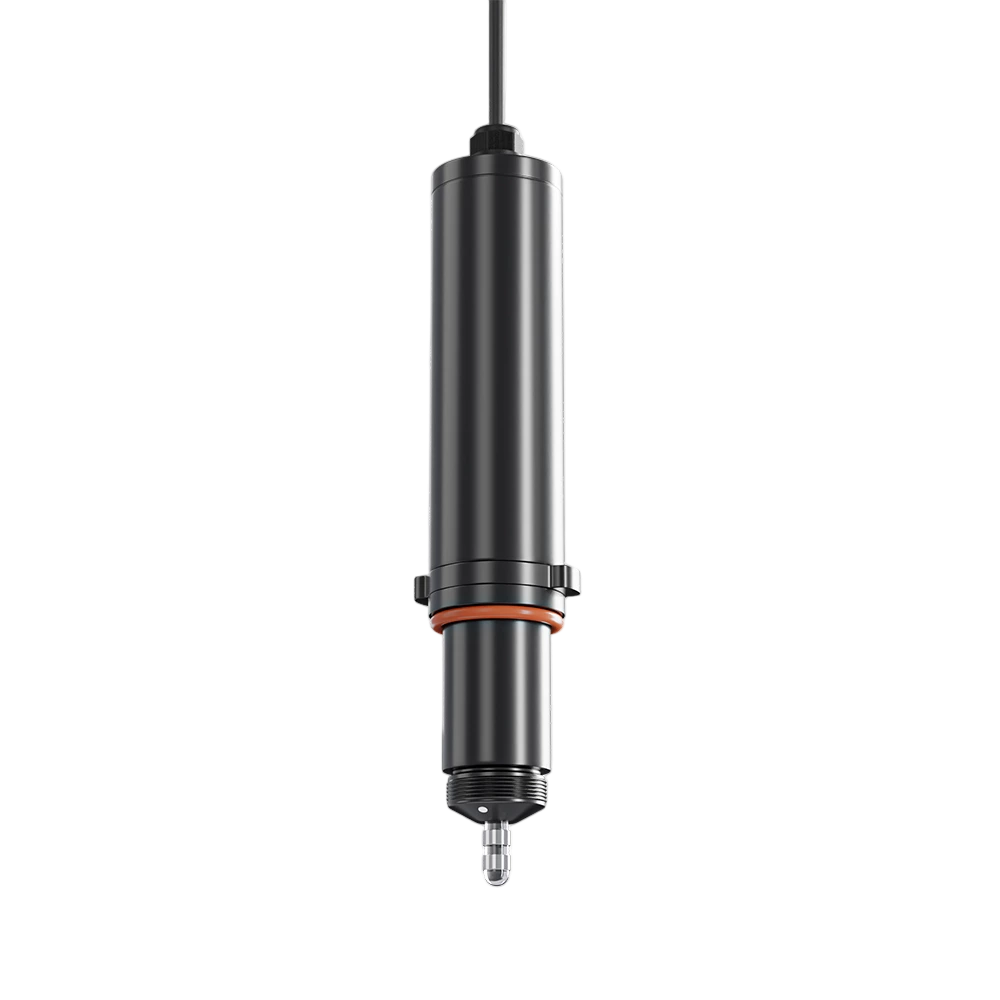
SUP-ADI7000 Residual chlorine sensor
Regular price
$860.00 USD
Regular price
Sale price
$860.00 USD
This is an all-inclusive reference price (product, international shipping, and import duties), based on a few selected configurations. Actual pricing may vary by size, options, and order quantity. Minimum order may apply for low-value items, while better pricing may be available for larger requirements. For a confirmed quote or to place an order, please contact us.
Share

Introduction
This residual chlorine sensor is a three-electrode constant potential current measurement sensor that can be used to measure the concentration of residual chlorine, chlorine dioxide (high purity), ozone and other disinfectants. The sensor has a built-in ARM processor and efficient filtering algorithm, which can effectively avoid noise interference. It has an RS485 interface for easy access to computers and network monitoring systems. Widely used in tap water factory water, pipe network, secondary water supply, terminals, swimming pools and other scenarios.
Specification
Measure range:
- (0~5)mg/L (standard), (0~20)mg/L
Accuracy:
- ±5% (DPD comparison error ±10% or ±0.05mg/L, whichever is greater)
Sensitivity:
- 0.001mg/L
Temperature compensation:
- NTC 10K
Communication:
- RS485 interface,Modbus-RTU protocol
Power supply:
- (9~24)VDC
Power consumption:
- ≤0.5W
Sensor interface:
- Aviation plug
Medium temperature:
- (0~50)℃
Process pressure:
- ≤0.1MPa
Water flow rate:
- (0.5~1)L/min(And the flow rate needs to be kept stable)
Cable length:
- 2m(standard), other lengths can be customized
Measuring principle
The film-free digital disinfectant sensor consists of two platinum electrodes and a silver chloride electrode forming a three-electrode measurement system. The electrodes have a built-in high-precision potentiostat, which can maintain the stability of the working electrode potential. Disinfectant components such as hypochlorous acid are oxidized at the working electrode. The reduction reaction produces an electric current that follows Faraday's law, thereby measuring the disinfectant concentration.